
Books I Read August 16th, 2026
RIP John Crowley—Little, Big remains one of the best works of fantasy ever written.
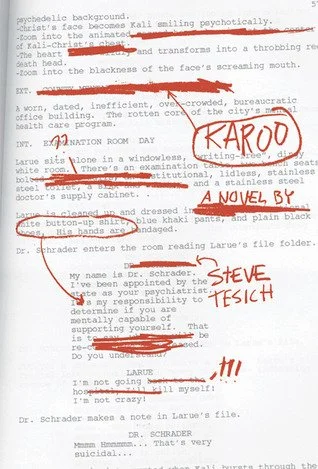
Karoo by Steve Tesich – Domain: Writing. Kingdom: Fiction. Phylum: Literary. Class: Intellectual man suffers an existential breakdown. Order: Gentile. Family: Hack screenwriter. Genus: Morbidly obese. Species: alcoholic. Subspecies: absurdist. Without pause, I can think of a few dozen mid-to-late-20th 'classics' which fall under a similar taxonomy, few of which I ever enjoyed. So it was on me for picking this one up, but still, I didn't like it.
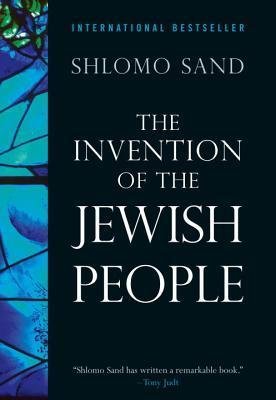
The Invention of the Jewish People by Shlomo Sands – Modern Jewry is descended from a hodge-podge of post-Biblical converts, and has no true claim to a genetic or historical heritage with the builders of the Second Temple. I like having my sacred cows poked at, but this is an argument in search of evidence. Most of it is an incredibly elaborate explication of the internecine feuds of modern Jewish historians, rather than actual Jewish history. When Sands does get to the crux of his argument, which takes up maybe a quarter of the book, he mixes bold, largely fact-free assertions with a tendency to reveal common wisdom as if it was esoteric knowledge. Have you ever heard of the Khazars!?! Yes, of course I have. What Jewish 14 year old with access to Wikipedia is unaware of the Jewish steppes state? And just as an aside, I'd love to learn that my ancestry includes these vigorous He-Men of Central Asia. That would be super cool. Unfortunately—and this is the real issue with the book—I cannot claim any direct biological inheritance with the might Kegans of old, and I know that because we have this thing called genetic testing now, and it does a pretty good job of roughly orienting your ancestry. And, for better or worse, none of my DNA (or those of my fellow Ash-Kenazim) can be traced in that direction. Sands makes a few scant references to genetic testing but basically ignores its ramifications, and it's impossible to avoid the conclusion that Sands is guilty of a profound and bizarre intellectual dishonesty in failing to reference the compelling scientific counter-arguments to his bold if ill-considered thesis.
It did, however, make me want to re-read Gentleman of the Road, a far more entertaining work about the diverse ethnic identities of the Hebrew people in the middle ages. Plus, it has swords.
Tourists by Lisa Goldstein – An ex-patriot fantasy in a vaguely-defined foreign land.
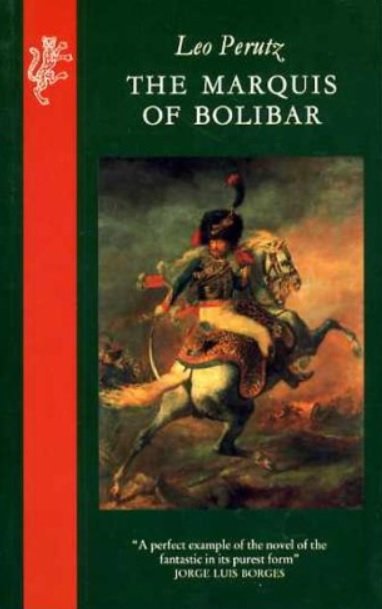
The Marquis of Bolibar by Leo Perutz – A small army of German soldiers in Spain as part of Napoleon's ill-fated invasion are destroy by the curse of the eponymous, their own obsessive love for their commandant's paramour. Perutz remains one of my undiscovered favorites—this combines the vivid specificity of good historical fiction with the luminous (im)possibilities of fantasy. Lots of fun.
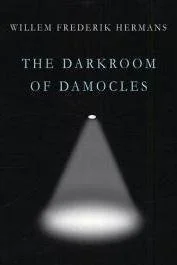
Darkroom of Damocles by Willem Frederik Hermans – A listless, effeminate tobacconist finds himself engaging in violent activities on behalf of the Dutch Resistance during WWII—or does he? Existentialist noir, which I will arbitrarily define as noir which is concerned with the complexities of identity rather than any concrete mystery per se, became an internationally ubiquitous sub-genre in the last 70 odd years. The Japanese seem to really love it, from Kobo Abe to (ugh) Haruki Murakami; Central and South American writers, from Alejo Carpentier to Bolano, have used it to great effect to explore their epochs of right-wing tyranny; and of course, here in the US it's become a remarkably popular way for third-rate scribblers to exaggerate their limited abilities at the expense of meaning or coherent plot (cough, Paul Auster, cough cough.) But this one is really spectacular, in large part because it isn't simply dealing with the abstract complexities of identity formation and societal alienation but of the real moral consequences of historical events, and of a post-War era in which truth and falsehood, bravery and betrayal, became difficult if not impossible to determine. Engrossing, disturbing, excellent. I'll read another by Hermans soon.
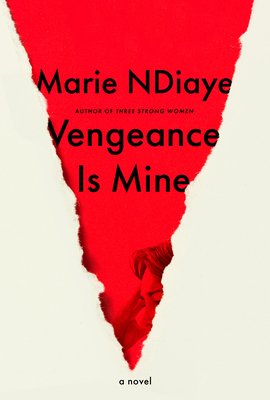
Vengeance is Mine by Marie NDiaye – A second-rate lawyer defends a mother who has killed her children, considers her own murky past and present, the corrupting influence which we have on one another, the omnipresent ominousness of existence. Excellent. Another book where I felt like, I've read a lot of other books that are like this, and they usually suck, but this one doesn't. NAME is a subtle and strange writer, and like Darkroom of Damocles above, this deals with a popular subject in a way which feels fresh and vivid, rather than something mass produced in MFA programs.
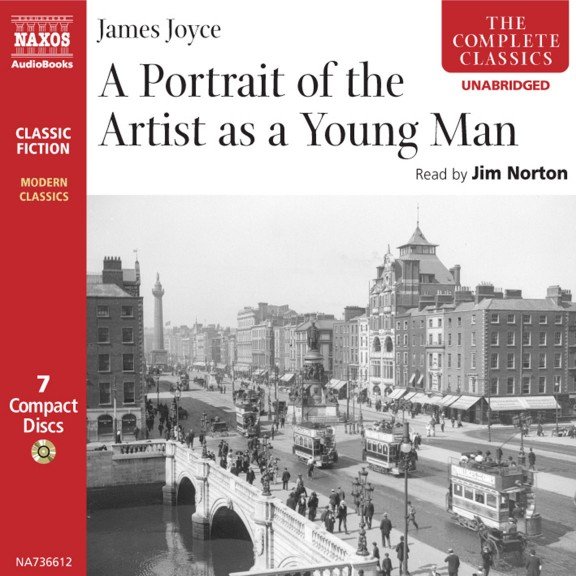
Portrait of an Artist as a Young Man by James Joyce – I read this one about 30 years ago, and believe it or not, didn't really understand it. It' vivid and beautiful, although I confess those lengthy portions which detailed Catholic dogma and the literary aesthetics kind of bored me. Once again, I thank an absent God that my mother, in her glorious wisdom, left the church in her youth and refused to trap us in its precepts.